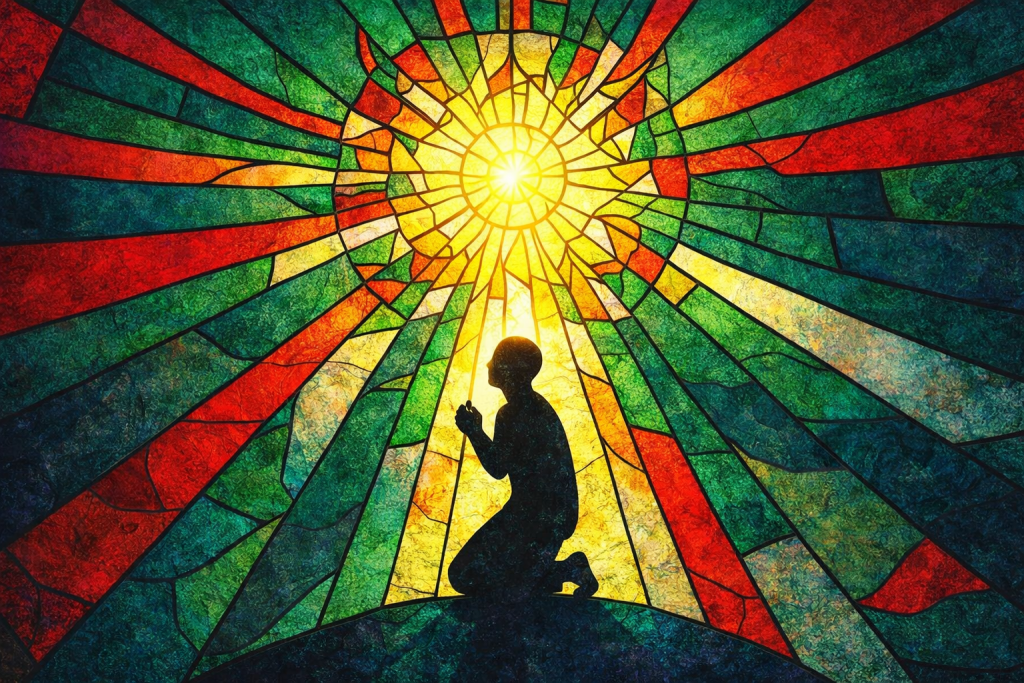
Autopilot Christianity can sneak up on us fast. Prayers start sounding like voicemails left in a hurry. Worship turns into background music. God starts feeling like a helpful sidekick for personal plans. Then a passage comes along and resets everything.
Hebrews 12 brings that reset. It shows God as terrifying and beautiful, like standing near a storm and realizing it knows your name.
Jesus Carried A Different Kind Of Confidence
One of the most gripping themes in the Gospels shows up in how Jesus speaks and moves. In John 5, John 8, and John 12, He describes a life that stays in step with the Father. He speaks what the Father gives Him. He does what He sees the Father doing. That kind of closeness carries a quiet authority.
And it makes a regular person in the pew ask a blunt question.
How often do words spill out first, then get stamped with a spiritual label after the fact?
Our world hands out microphones like candy, and everyone wants a turn. That pressure shows up even in everyday conversations after church, in group texts, online, everywhere. Fill the silence. Keep the energy up. Say something smart. Get the last word. But Jesus shows a different path. His power came from obedience and intimacy, not performance.
The Fear Of Silence And The Temptation To Perform
Religious culture can train people to treat worship like a presentation.
Hook them with a story. Toss in a joke. Keep people from drifting. Build momentum. Stick the landing.
Some of it comes from a good place. People want to communicate clearly. But there’s a danger hiding under the technique. When confidence rests on strategy, it can accidentally drain the moment of spiritual weight. Worship can start feeling like something to manage.
Silence feels risky because silence forces trust.
Waiting on the Spirit can feel risky, like standing there empty-handed while everyone watches.
The New Testament keeps nudging the church toward a kind of ministry fueled by God’s power and carried by humble simplicity. Paul even talks about avoiding certain styles of persuasion so the cross keeps its power. That idea stings in a helpful way.
Hebrews 12 Makes God Feel Huge Again
Hebrews 12:18-29 draws a contrast that rattles a person every time it sinks in.
It reminds us that God’s presence has real weight. The passage reaches back to Sinai with fire, darkness, gloom, storm, trumpet blasts, and a voice so intense that people begged for it to stop. Even Moses trembled.
That sounds intense because it is intense.
And that intensity exposes how casually God can get treated. Sometimes faith becomes a self-improvement plan. God becomes a tool. Prayer becomes a way to request upgrades for life. Everything starts orbiting feelings.
Hebrews 12 pulls the camera back.
God stands beyond what can be touched. God carries holiness that overwhelms human categories. And God commands a kind of reverence that makes “vibes” feel small.
Our Opinions Shrink When We Remember Who We’re Facing
Here’s a strange thing about modern life. People get trained to believe opinions always matter.
Truth. Feelings. A voice. A take.
But Hebrews 12 reminds us that worship begins with reality, not self-expression.
Picture a tornado moving toward you.
Suddenly, an opinion stops feeling like the main event.
That’s the point. Wisdom begins when God’s greatness and human smallness can sit in the same sentence. Reverence creates clarity. Awe cleans the lens.
Prayer Changes When Heaven Feels Real
Hebrews 12 says prayer brings believers to Mount Zion, the city of the living God, the heavenly Jerusalem. It describes countless angels in joyful gathering. It talks about the people of God enrolled in heaven. It points to God as Judge, and to Jesus as the mediator of the new covenant.
That’s the room people enter when they pray.
Not metaphorically. Spiritually.
So why do prayers drift into self focused loops? Why does heaven feel empty and God feel distant in the mind?
When the Bible describes worship, it describes a real throne, real glory, real holiness, real joy, real order. When that scene fills the imagination, prayer gains weight. It gains focus. It gains humility.
God’s Voice Shakes What Can Be Shaken
Then Hebrews 12:26 hits you.
“At that time his voice shook the earth, but now he has promised, “Yet once more I will shake not only the earth but also the heavens.”
God promises a shaking that reaches the earth and reaches the heavens.
That image carries a message needed in a world obsessed with what looks solid. People build things, chase things, stress over things, and cling to what they fear losing. Scripture says God will shake creation until what lasts stands firm.
The invisible becomes the lasting.
The kingdom of God becomes the stable ground.
When that sinks in, the grip loosens. Life opens up. Attention shifts toward what God forms in the soul rather than what can get stacked in a schedule.
Worship That Pleases God Includes Reverence and Awe
Hebrews 12 says worship can truly please God, and it sketches what that kind of worship looks like.
That means worship involves more than showing up and singing songs. It involves recognizing who God is while singing them. It calls people to honor His holiness with real respect and real awe.
Jesus himself prayed with reverence. That detail should slow everyone down. Reverence shapes posture. Reverence shapes tone. Reverence shapes attention.
Reverence also reshapes what people want. Because once God registers as a consuming fire, worship starts feeling less like self-expression and more like surrender.
Fear Leads to Confidence When Love Enters the Picture
Here’s the twist that makes Christianity so stunning.
The God described as fire and storm also pursues His people with mercy.
So fear of the Lord doesn’t leave people crushed. It puts hearts in the right place. Then grace lifts them up. The God who can shake the heavens chooses to live within His children.
That reality creates a different kind of confidence.
Not loud confidence.
Quiet confidence.
The kind where applause stops running the show because belonging to the King already settles identity. The kind where validation loses its grip because value comes from union with Christ. The kind where fearless living becomes possible because an unshakable kingdom holds steady when everything else rattles.
Walking Out Different Than You Walked In
Worship should carry weight.
Prayer should feel sacred again.
The goal can feel simple. Walk around remembering what Hebrews 12 reminds us. God reigns in holiness. Heaven worships in fullness. Jesus mediates with blood that speaks a better word. A kingdom stands unshakable, and by grace, believers get welcomed into it.
So maybe the simplest prayer looks like this:
Father, give us fresh awe. Teach us reverence. Let worship carry the kind of honor You deserve. Let life reflect the reality that You are God, and we get the privilege of belonging to You.

I’m the writer behind Monk & Martyr. I don’t have formal seminary training, and I take comfort in the fact that Saint Francis of Assisi did not either. My “training” has been lived conversion and the slow work of following Jesus through real seasons of life. I write honest, Scripture-rooted encouragement that points back to one thing. You’re loved more than you know, and Christ’s grace is bigger than whatever you’re carrying.